Causal therapy
For you with inflamed gums or early-to-moderate periodontitis.
- Deep scaling and root planing
- Cleans below the gum and heals the pockets
- No surgery, under local anaesthetic
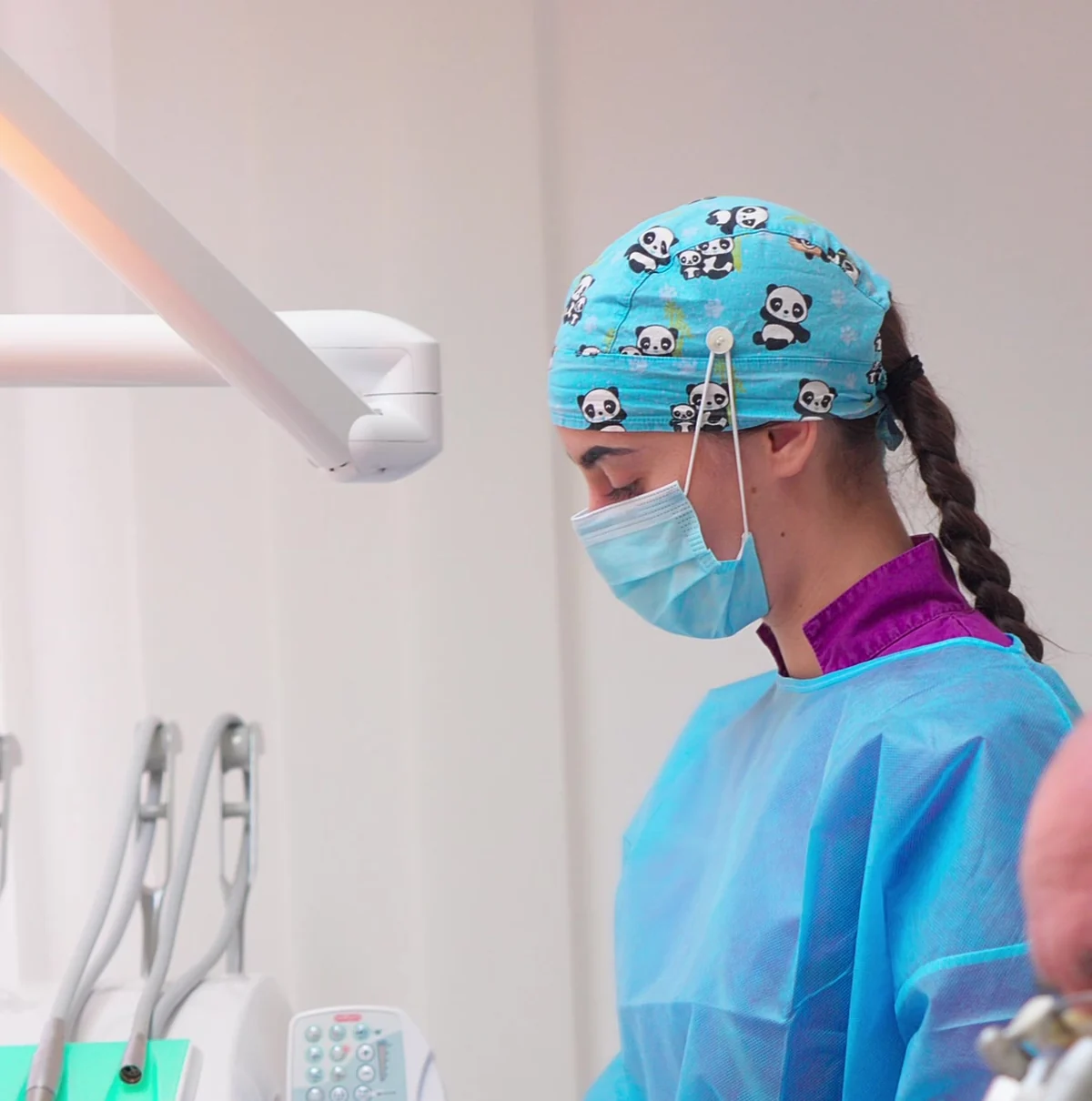
Home · Services · Periodontology
Periodontology · OlbiaPeriodontitis (gum disease), receding gums, teeth that start to move: these are the signs of a silent disease that, caught in time, can be stopped. In Olbia we measure it and treat it, and we support you so it does not come back.
Most people live for years with a little blood when they brush, thinking it is normal. It is not. It is the first sign of periodontitis, the disease that silently eats away the bone that holds your teeth in place — painlessly, until the teeth start to move.
The good news is that this bleeding is also your opportunity: caught in time, the path is simple. The message is not "we will cure you", but "the sooner we see it, the more teeth we save".

Gums that bleed when brushing or flossing · red or swollen gums · persistent bad breath · gums that recede and teeth that look "longer" · black spaces opening up between the teeth · teeth that move or shift. Often they do not hurt: which is exactly why they need checking.
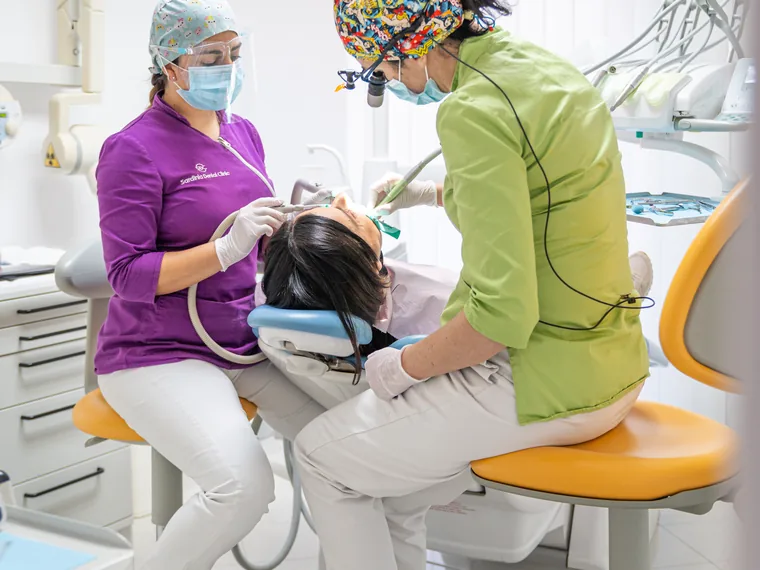
Periodontitis cannot be judged by looking: it has to be measured. With periodontal probing we record the depth of every pocket, millimetre by millimetre, and with the in-house 3D CT scan we quantify the real bone loss.
This way we show you the true state of your mouth — with the data in hand, not just an impression. It is the end of "they always find something": here you see why (or why not) treatment is needed.
They look like the same thing, but there is a line that separates them — and it is the line between "reversible" and "to be kept under control for life". Knowing which side you are on makes all the difference.
A gradual path, in which at every stage we check the response before moving on.
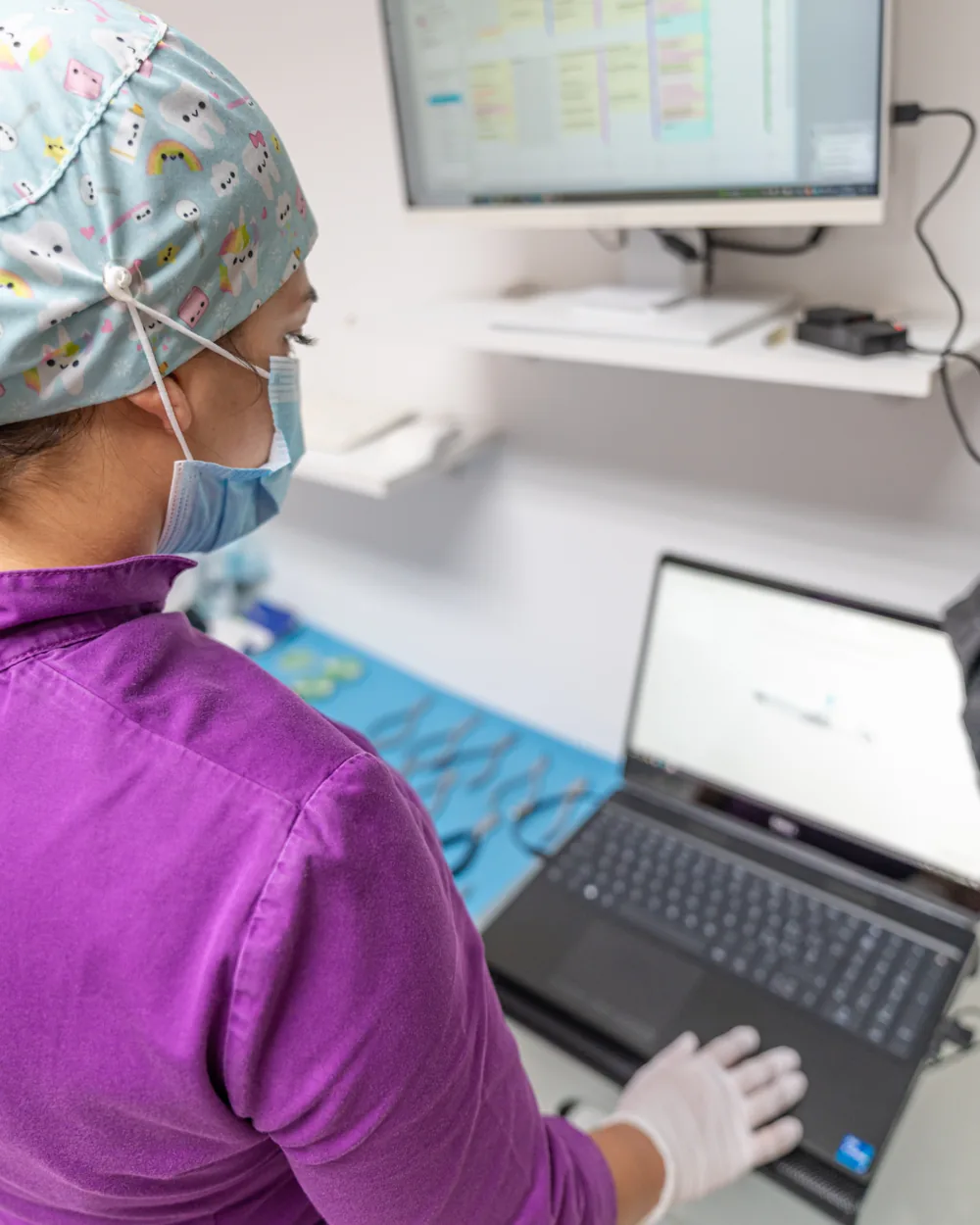
Periodontal probing and 3D CT scan to measure pockets and bone loss, and understand the real stage.
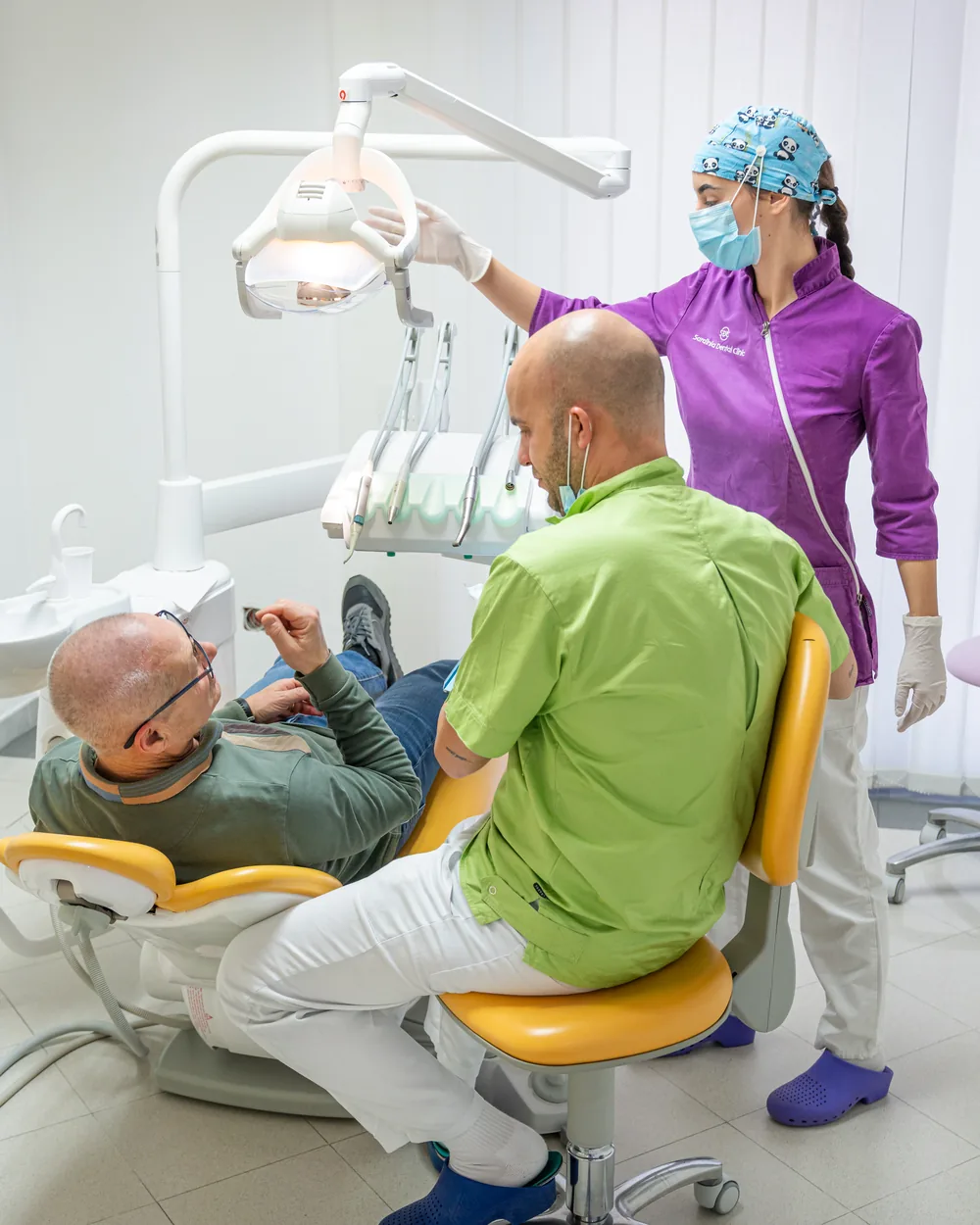
Deep scaling and root planing, under local anaesthetic, to remove tartar and bacteria right below the gum and let the pockets heal. Where indicated, with the aid of the laser.
After a few weeks we re-measure the pockets to check the response and decide the next step together.
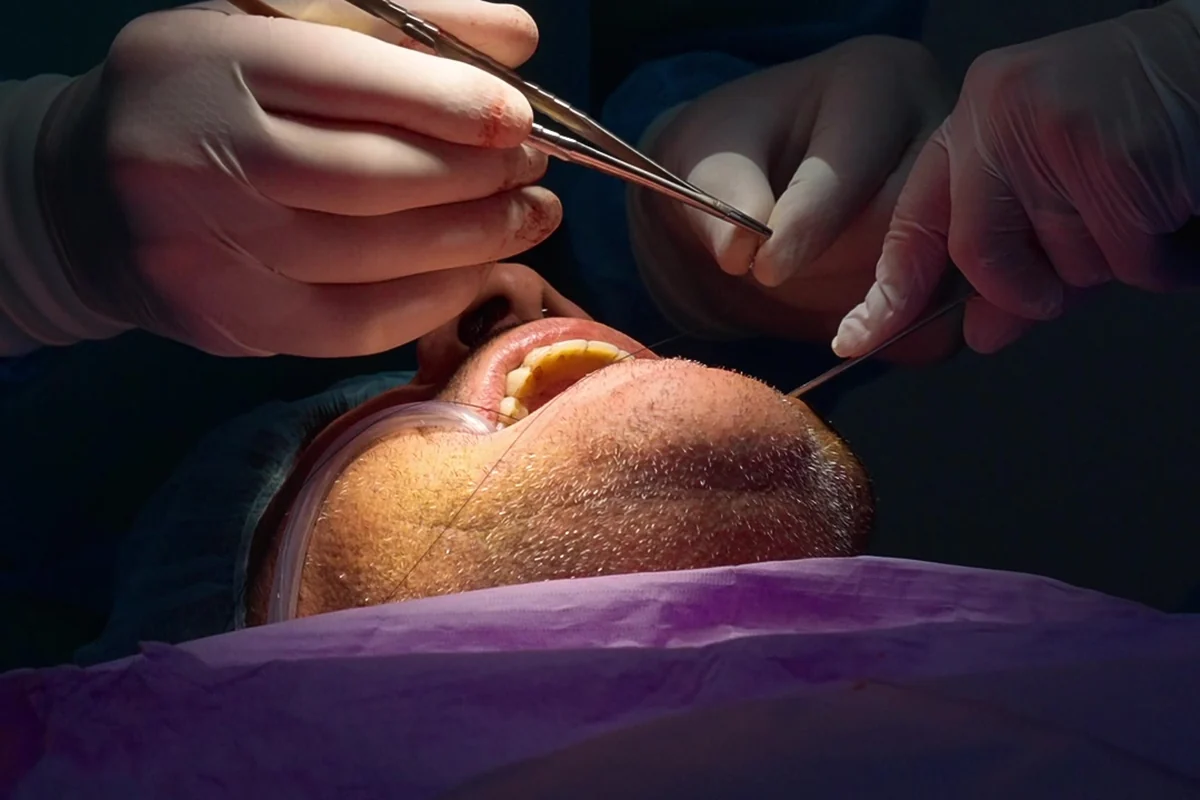
In advanced or non-responsive cases, surgical or regenerative therapy to recover tissue and bone where conditions allow.
Personalised recall visits to keep the disease under control over time: it is the part that stops periodontitis from coming back.
Each situation has its own answer: the colour tells you whether it is a first-line treatment, an advanced procedure or long-term maintenance.
Periodontitis caught in time changes course. It is worth a visit, in Olbia, if you recognise yourself in one of these situations.
Periodontitis is stopped and kept under control over time: the damage to bone already lost does not come back, but with early diagnosis and the right treatment its progression is halted and the teeth are saved. The outcome depends on how promptly you act and on maintenance, and we assess it case by case.
Bleeding is the first sign of gum inflammation (gingivitis), almost always caused by plaque and tartar. It is not normal and should not be ignored: caught early it is reversible, left unchecked it can develop into periodontitis. A visit tells us where you stand.
We start from an objective diagnosis (periodontal probing and 3D CT scan) to measure pockets and bone loss. Then the non-surgical causal therapy — deep scaling and root planing, under local anaesthetic — heals the pockets. In advanced cases surgery is considered. Finally, maintenance with personalised recall visits keeps the disease under control.
If left untreated, yes: it progressively destroys the bone that supports the teeth, which start to move until they are lost. That is exactly why early diagnosis changes everything: caught in time, teeth that seemed compromised can often be saved.
Gingivitis affects only the surface gum and is reversible if treated. Periodontitis (gum disease) is the next stage: it also involves the supporting bone, with damage that can be stopped but not undone. The line between them is set by measuring the pockets.
The treatment is carried out under local anaesthetic, so you feel no pain during the session. In the following days there may be a mild sensitivity, which is easily managed. We explain every step before we begin.
It depends on the stage of the disease and the number of sessions needed: that is why there is no single price. At the first visit, free and with no obligation, we measure the real situation and give you a clear plan and quote before you decide.
There is a family predisposition: those with cases in the family are more at risk and should have more careful check-ups. The bacteria responsible can pass between people living together, but the disease only develops in the presence of contributing factors such as plaque, smoking and poor hygiene.
Yes, scientific research has shown a two-way link, particularly with diabetes: treating the gums helps overall health and vice versa. That is why periodontitis should not be seen as a problem of the mouth alone.
We decide the interval together based on your case: someone who has had periodontitis needs more frequent recall visits than someone with healthy gums. Maintenance is not an extra: it is the part of the treatment that stops the disease from returning.
Book your first visit, free and with no obligation: we measure the state of your gums and bone and tell you honestly whether — and what — needs doing.