First visit and assessment
You simply want to understand whether and when something needs to be done.
- We assess growth, bite and habits
- Often the advice is to monitor, not to treat
- Free and with no obligation
Home · Services · Children's orthodontics
Children's orthodontics · Interceptive · OlbiaIn childhood, the face and mouth are still forming: this is the window in which we can guide growth, rather than correcting later. In Olbia we assess your child and step in only when it is needed — and at the right moment.
Your child's first dentist matters, and so does their first orthodontist. Stepping in within the right window — usually between the ages of 6 and 10, when the bones are still shapeable — makes it possible to guide growth and often to avoid long treatments or extractions in adulthood.
That is why the first visit is not a commitment: it is the way to work out together whether there is something to follow, to intercept, or simply to monitor over time. Without alarm.
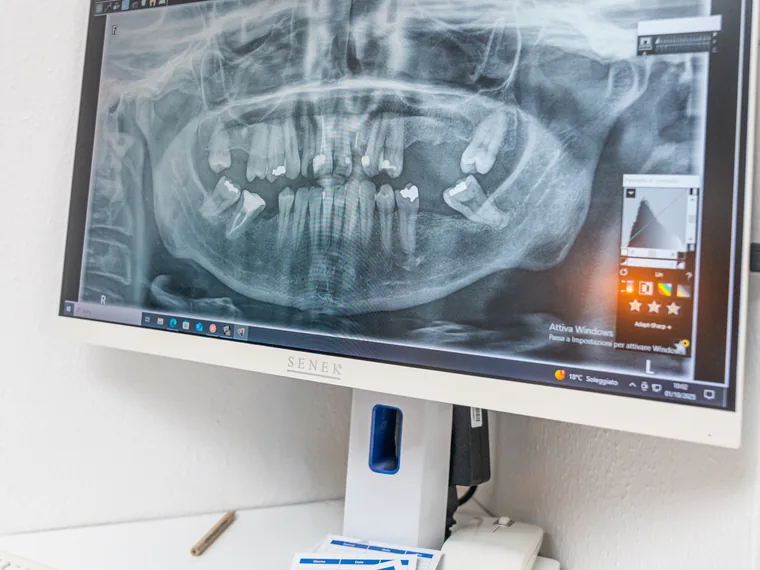
Crooked or crowded teeth · a narrow palate, teeth that "can't find room" · crossbite or open bite · difficulty closing the mouth, lips often apart · breathing through the mouth, snoring, sleeping with the mouth open · a dummy or thumb beyond the age of 3 · the tongue pushing against the teeth (atypical swallowing).
Interceptive orthodontics "intercepts" a problem while the child is growing, to guide the development of the bones and dental arches. It is different from classic braces, which straighten teeth that have already formed.
It makes the most of a window that then closes: in adulthood the same correction can require surgery or extractions. The first phase creates the conditions; any second phase, in the teenage years, refines the result and is shorter — and is not always needed.
The colour tells you whether it is an assessment, an appliance to guide growth, or a step that will concern the teenage years.
Waiting is not always free: some growth windows, once closed, do not come back.
These are typical scenarios, not the guaranteed outcome for an individual case: that is decided by the clinical assessment of your child.

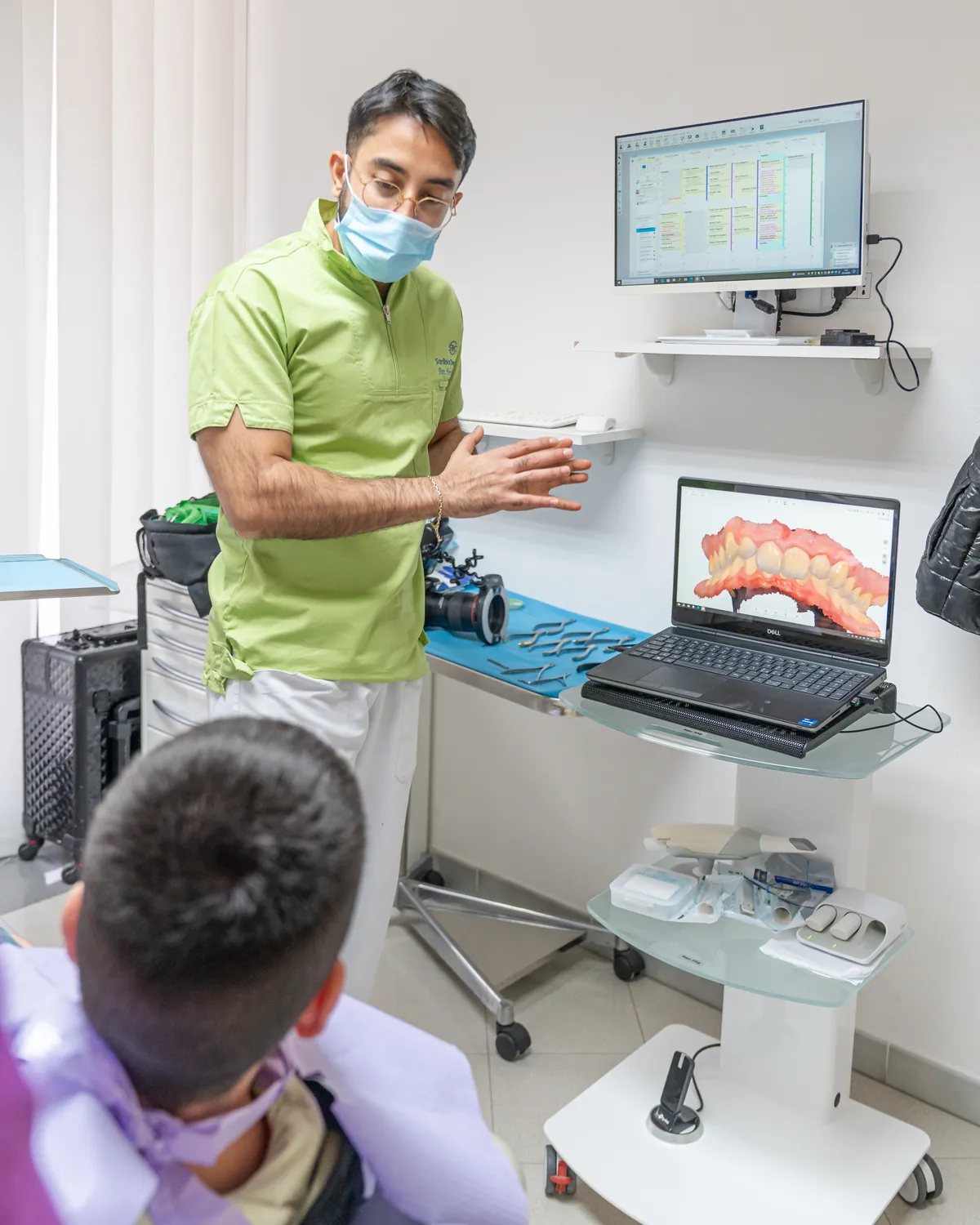
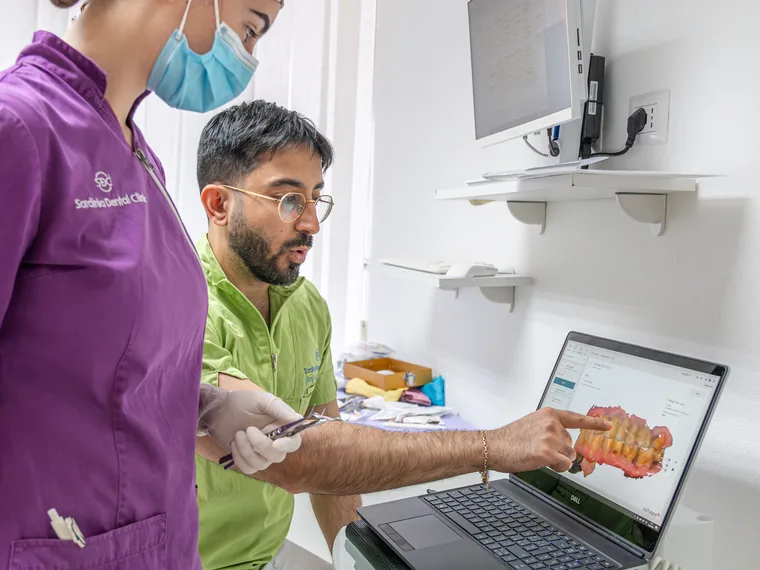
With our on-site intraoral scanner we take the impression without unpleasant pastes — a relief for children — and with the 3D CT scan we study growth when it is needed.
If you recognise one of these situations, a visit to Olbia is worth it — often it is enough just to monitor.
Around the age of 6-7, even if the teeth look straight: at this stage we can catch any growth issues with the bones and dental arches in good time. Often, at the first visit, the advice is simply to keep an eye on things rather than to treat.
It is the orthodontics that "intercepts" a problem while the child is growing, to guide the development of the bones and dental arches rather than simply straightening the teeth later. It makes the most of a window — usually between the ages of 6 and 10 — when the bones are still shapeable.
Some things, such as a narrow palate or a crossbite, are corrected by guiding growth while the bones have not yet fused. In adulthood, the same correction can require extractions or surgery. Acting at the right time often means a simpler, shorter path.
It gently widens a narrow palate by making use of the child's growth, creating the space the teeth need and improving the bite and sometimes breathing. The active phase lasts a few weeks, followed by some months of stabilisation.
It is not pain: in the first few days after activation there may be a little discomfort or a feeling of pressure, which soon passes. Appliances for children are designed for their age, and we guide them through it calmly.
In most cases, yes: the path is gradual and the appliances are suited to their age. We involve the child by explaining things in simple terms, and our experience with families helps us put them at ease.
The mixed dentition stage is precisely when growth can be guided. It is never too early for an assessment, while it is sometimes too early to act: the visit will tell whether to follow, intercept or simply monitor over time.
Beyond the age of 3, a prolonged habit such as a dummy or thumb can affect the position of the teeth and the shape of the palate. It is worth an assessment to understand whether and how to step in, without alarm.
Not always, but often a first interceptive phase makes any later treatment simpler and shorter. Not all children need both phases: we assess it case by case, without making promises.
Book your child's first visit, free and with no obligation: together we'll work out whether there is something to follow, to intercept or simply to monitor.