Root canal treatment
You have a tooth with deep decay or a pain that reaches the nerve.
- Removes the infected pulp and saves the tooth
- Under local anaesthetic, often in a single session
Home · Services · Endodontics (root canal)
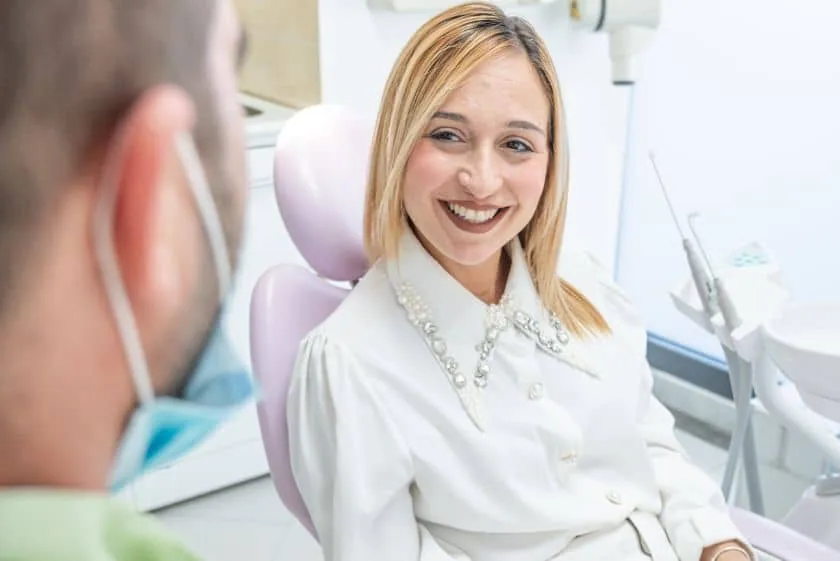
Endodontics · Root canal · OlbiaSevere toothache, an abscess, deep decay: root canal treatment is not the end of the tooth, it is the way to keep it. In Olbia we treat the infected inner part and preserve your natural tooth, with a 3D CT scan (CBCT) on site for the more complex canals.
When you look for a dentist with severe pain, perhaps at night, or with a swollen cheek, you want two things at once: for the pain to stop and not to lose the tooth. Root canal treatment answers both.
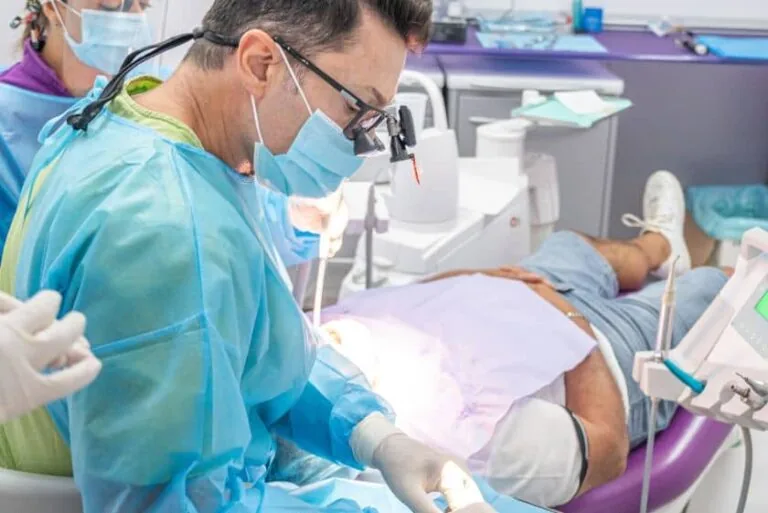
We remove the infected pulp — the inner part of the tooth where the nerve and vessels run — and seal the canals. All under local anaesthetic: often it is the treatment itself that takes away the pain that brought you to us.
Deep decay reaching the nerve · spontaneous pain, often worse at night · sensitivity to hot or cold that persists long after the stimulus · swelling of the gum or a small pocket of pus (abscess) · a tooth that hurts when biting · a tooth that darkens after an injury. Every case needs to be confirmed with a clinical assessment.
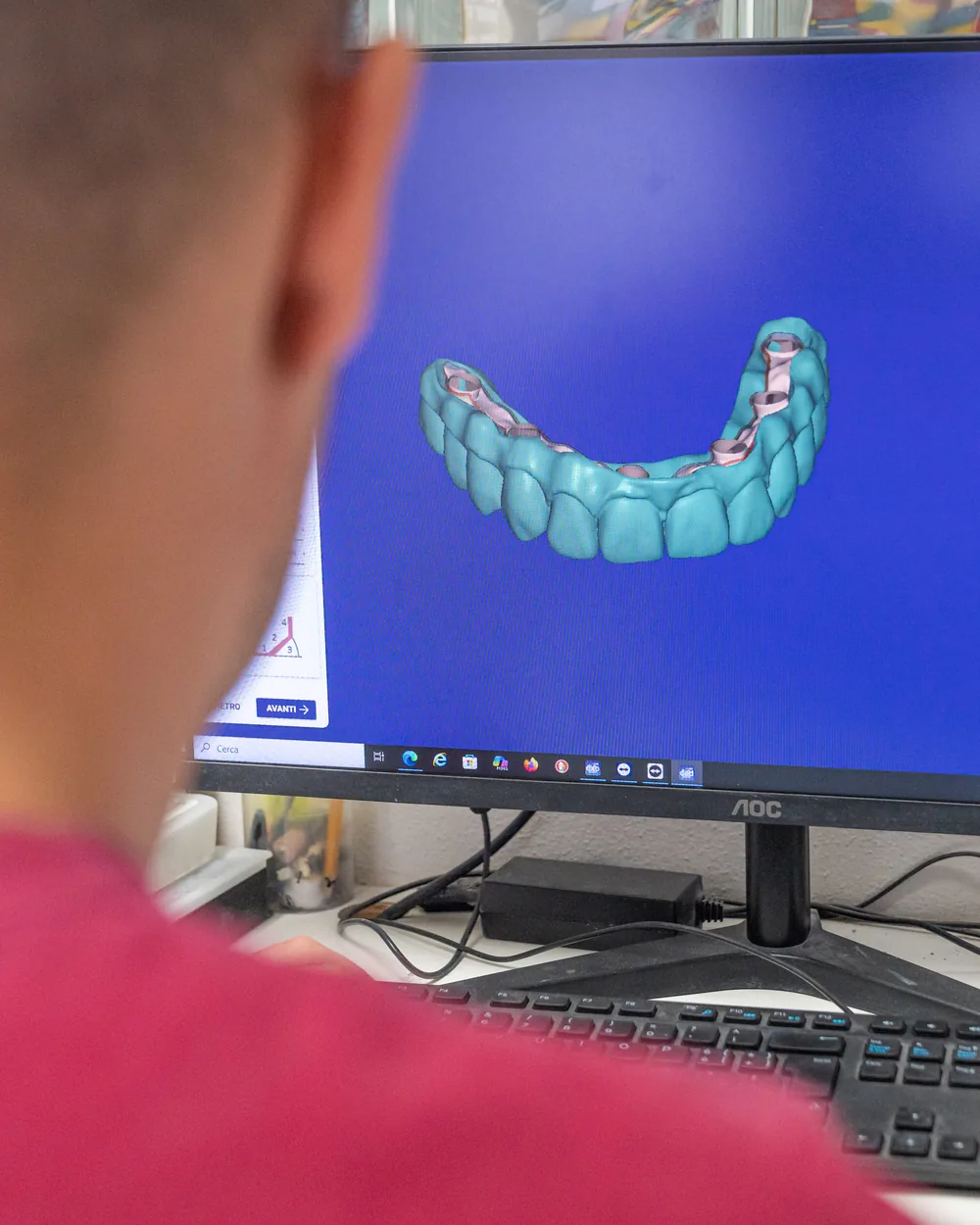
A tooth's canals can be narrow, curved or hidden. With the 3D CT scan (CBCT) on site we map them before treating and pinpoint abscesses and lesions at the tip of the root, even when an ordinary X-ray is not enough.
A precise, clearly explained path, so you always know what we are doing and why.
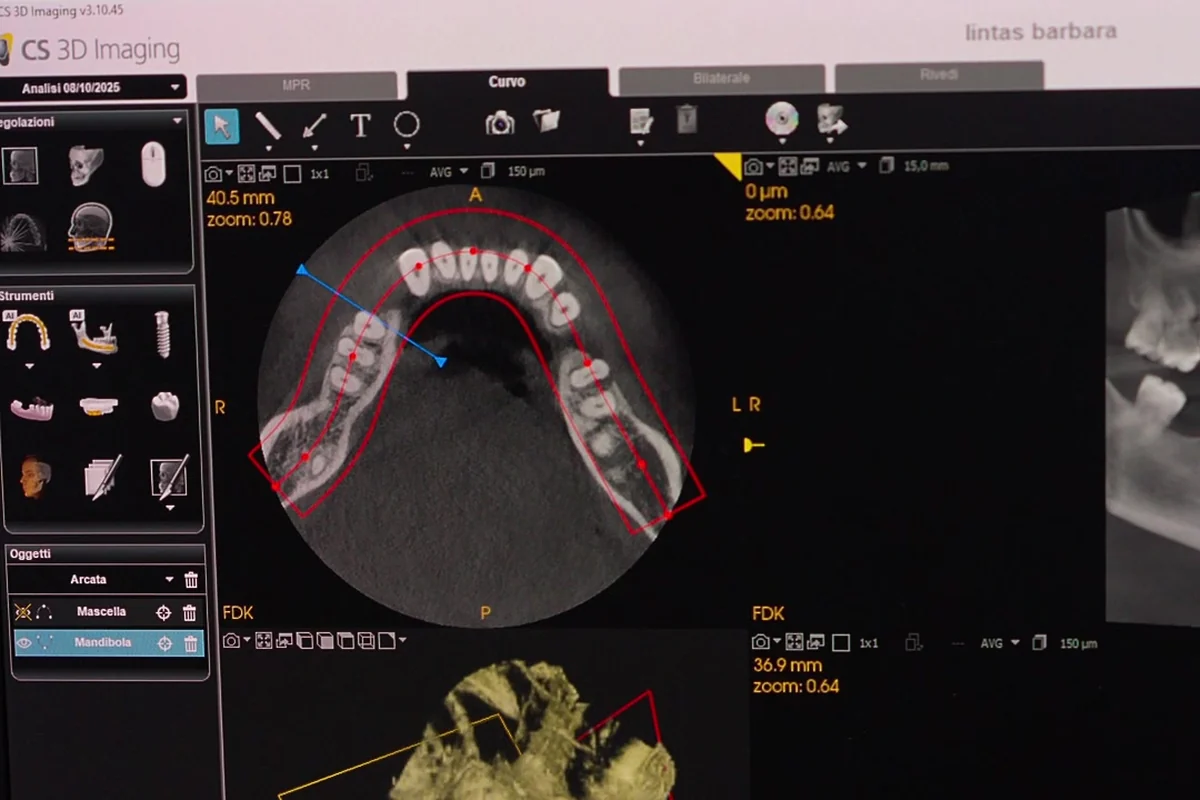
Examination, tooth vitality test, X-ray and — in complex cases or when an abscess is suspected — a 3D CT scan (CBCT) on site.
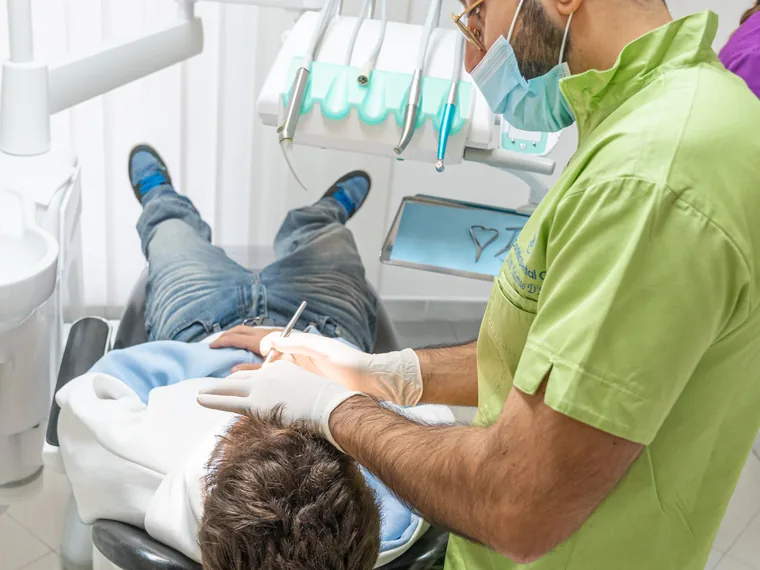
We numb the area: the treatment is carried out pain-free during the session.
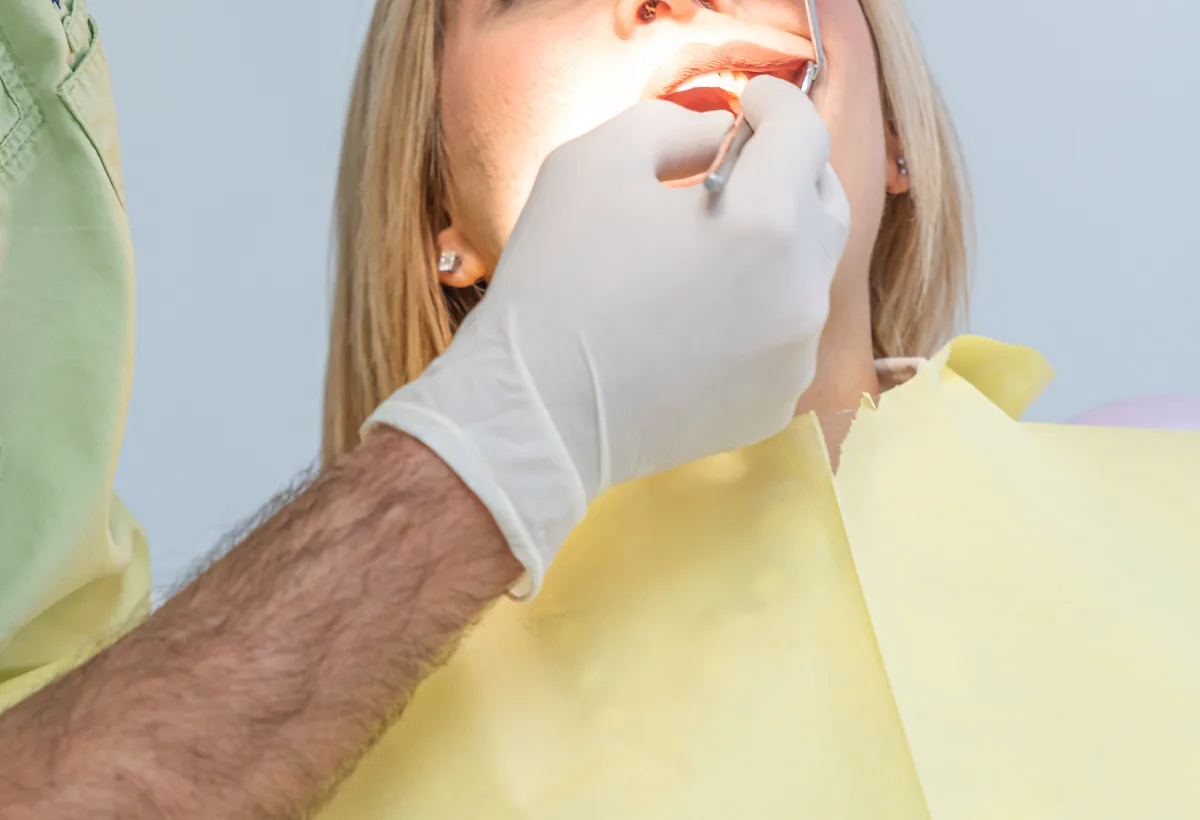
We remove the infected pulp and shape the canals with dedicated instruments and magnification.
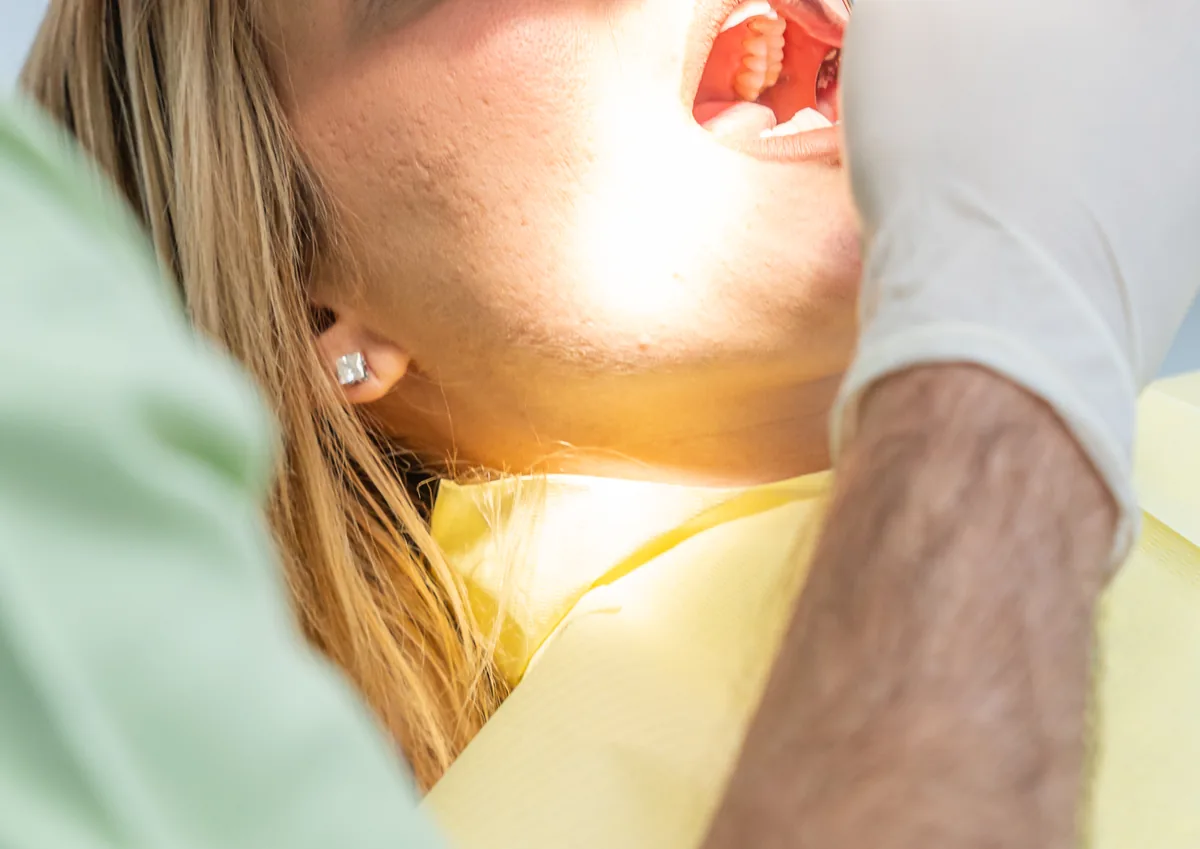
We seal the cleaned canals with gutta-percha to prevent new infections.
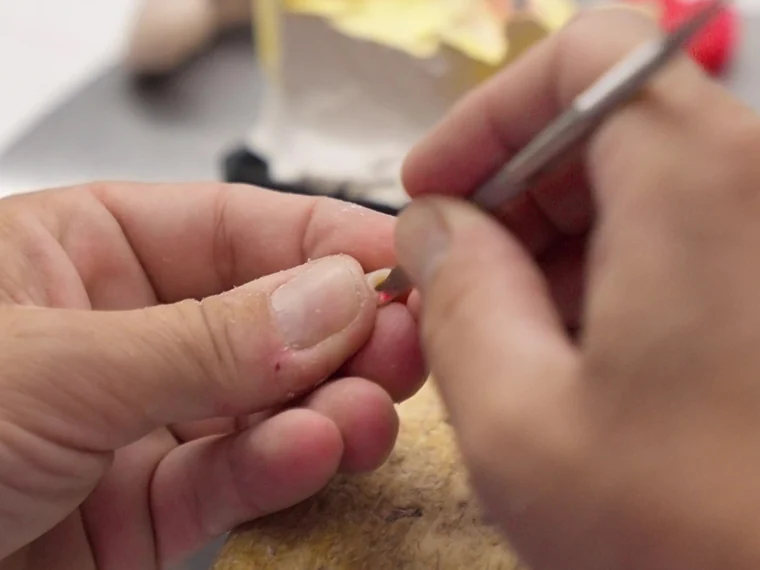
We rebuild the tooth; when it is weakened, we protect it with a crown.
The colour tells you whether it's a first treatment, work on an already-treated tooth or an emergency to handle right away.
When the tooth can be saved, keeping it is almost always the better choice. Here is the comparison, so you come to the visit prepared.
If the tooth cannot be saved, a single implant is an excellent solution: we'll tell you honestly after the assessment.
If you recognise yourself in one of these situations, it's worth an assessment — the tooth can often be saved.
The treatment is carried out under local anaesthetic, so you feel no pain during the session. In fact, it is often the root canal treatment itself that takes away the severe toothache that brought you to us. In the following days there may be some sensitivity, easily managed with the medication we recommend.
In simple cases a single session is often enough. When there is an active infection or abscess to clear, more sessions may be needed. After the diagnosis we give you a realistic idea for your case.
It depends on the number of canals in the tooth and on the complexity: this is why there is no single price. At the first visit, free and with no obligation, we assess the case and give you a clear quote before going ahead.
Often yes: a root-treated tooth is more fragile, and a crown protects it from fractures while giving back its strength and appearance. We assess it case by case; if needed, we make it in our in-house laboratory (see the crowns and prosthetics page).
Usually not, because the infected pulp has been removed. If pain comes back some time later, a root canal retreatment may be needed: it doesn't mean the tooth is lost, only that it needs cleaning again, often with the help of the 3D CT scan (CBCT).
When the tooth can be saved, saving it is the first choice: your natural tooth remains the best solution. An implant is excellent when the tooth can no longer be saved. We decide together after the clinical assessment, with no pressure.
It is the treatment of an already root-treated tooth that has become re-infected or was not fully cleaned. The old material is removed from the canals and they are cleaned again. The on-site 3D CT scan (CBCT) is a great help in finding narrow or missed canals.
A neglected abscess can spread to the bone and nearby tissues, which is why it needs prompt assessment. Acting early, often with root canal treatment, stops the infection and relieves the pain. If you have swelling and severe pain, call us.
For the first few hours, while the anaesthetic wears off, it is best to avoid biting on the treated side. After that you can gradually return to your usual habits, taking some care with very hard foods until the tooth has been rebuilt or protected with a crown.
In pain or have a tooth to check? Book your first visit, free and with no obligation: together we'll work out whether and how to save it, with the right diagnosis.